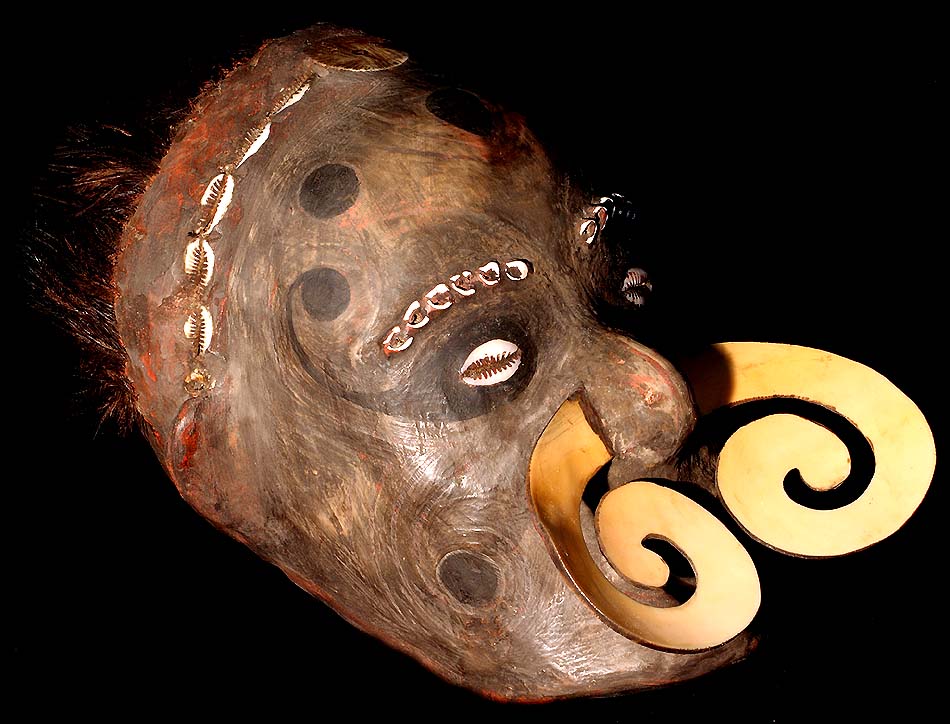
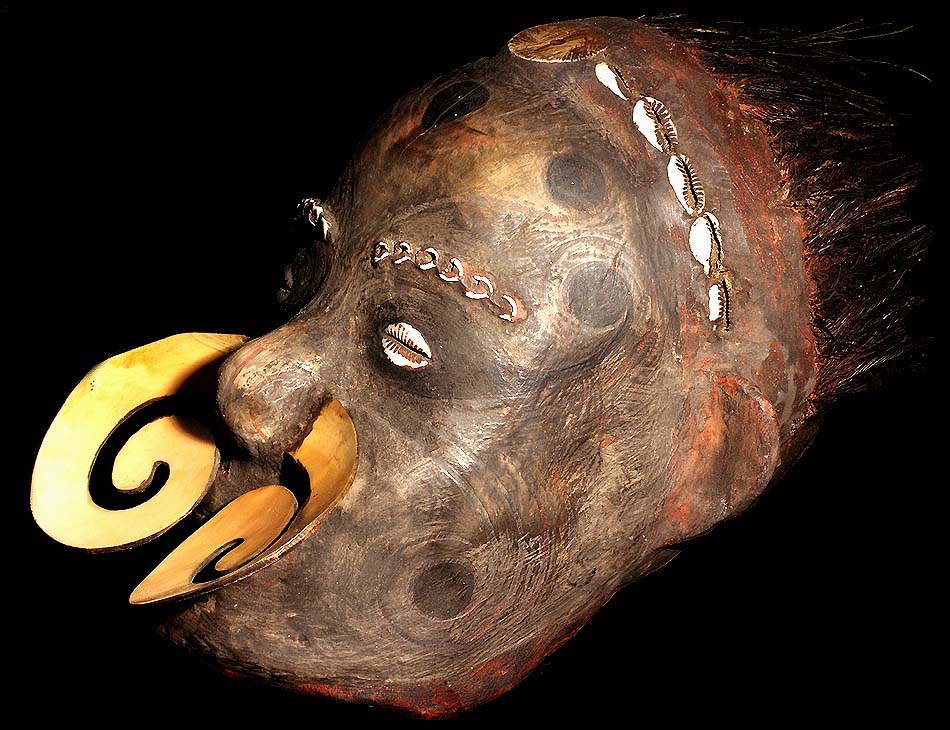
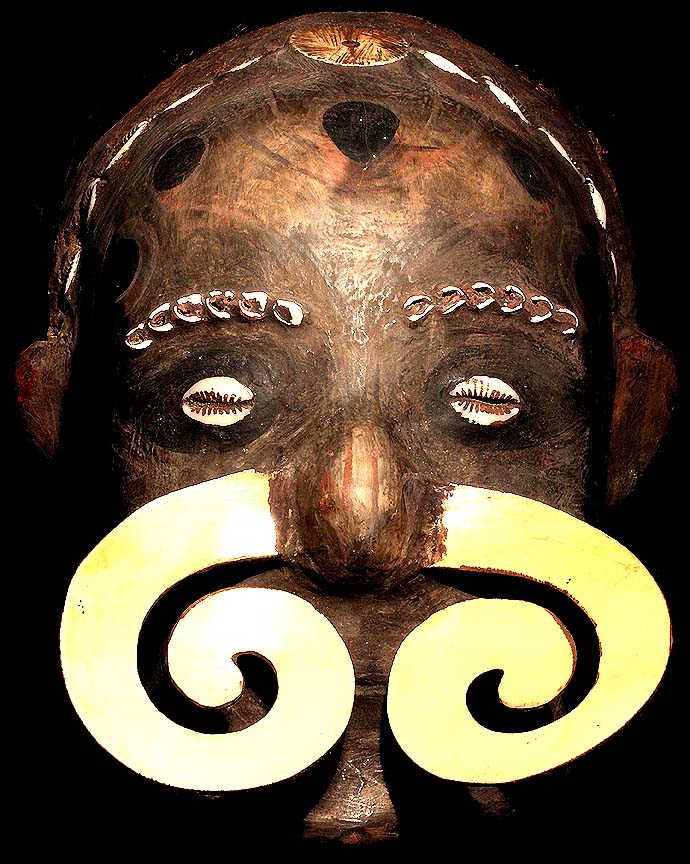
HUMAN BONE, CASSOWARY FEATHERS, SHELL NOSE RING, FIBER, SHELLS, TERRA COTTA
|
HUMAN ANCESTOR SKULL #12 |
|
HUMAN BONE, CASSOWARY FEATHERS, SHELL NOSE RING, FIBER, SHELLS, TERRA COTTA |
|
ship led by a Dutch trader, Jan Carstensz in the year 1623. Captain James Cook and his crew were the first to actually land in Asmat on September 3, 1770 (near what is now the village of Pirimapun). According to the journals of Captain Cook, a small party from the HM Bark Endeavour encountered a group of Asmat warriors; sensing a threat, the explorers quickly retreated. In 1826, another Dutch explorer, Kolff, anchored in approximately the same area as that visited by Cook. When the Asmat warriors again frightened the visitors with loud noises and bursts of white powder, Kolff's crew also rapidly withdrew. The Dutch, who gained sovereignty over the western half of the island in 1793, did not begin exploring the region until the early 1900s, when they established a government post in Merauke in the southeast corner of the territory. From there, several exploratory excursions with the goal of reaching the central mountain range passed through the Asmat area and gathered small numbers of zoological specimens and artifacts. These artifacts were taken to Europe where they generated much interest, and probably influenced modernist and surrealist Western artists such as Henri Matisse, Marc Chagall and Pablo Picasso. THE DAYAK, IFUGAO, AND NAGA HUMAN SKULLS ARE HEAD HUNTING TROPHIES. THE ASMAT "ANCESTOR" SKULLS. THE DIFFERENCE IS; HEAD HUNTED SKULLS ARE ACQUIRED FROM ENEMY ANCESTOR SKULLS ARE COLLECTED AND VENERATED TO REMEMBER DECEASED FAMILY MEMBERS. THE IFUGAO COLLECT BONES OF DEAD RELATIVES; WRAP THEM IN TRIBAL TEXTILES, AND STORE THEM IN THE RAFTERS UNDER THEIR HUTS. HUMAN SKULLS AND SKULL CAPS FROM NEPAL ARE RITUAL OFFERTORY VESSELS THAT ARE USED AS DRINKING CUPS IN TIBETAN BUDDHIST CEREMONIES. |
| |